
Repair, Reuse, Revamp
With a 12-week wait list for furniture repairs, more than two decades of upskilling people in the local community, Longford’s Revamp 3R Store is thriving.
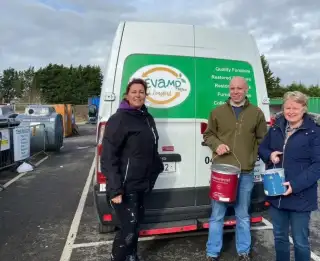
With a 12-week wait list for furniture repairs, more than two decades of upskilling people in the local community, Longford’s Revamp 3R Store is thriving.
“Their waste was our resource.” So says Revamp’s Breda Murphy, Project Manager at Revamp 3r Store in Longford, on the origins of a booming social enterprise in Longford.
Dating back to 1998, when high numbers of youth unemployment were deeply affecting Longford Town, the idea behind what is now Revamp 3R Store emerged.
Initially to allow local young people to develop skills that could help in their search for work, the Revamp training program was established.
Operated in conjunction with the Longford Westmeath Education and Training Board (LWETB) and Solas, it tutored woodwork, tiling and upholstery, as well as universal subjects like maths, English and communications.
To run the program, organisers would source old furniture that could be worked on for training purposes. But at some point, a realisation dawned – these pieces, restored by students to their former glories, were simply too beautiful to discard.
Soon enough, local people were bringing their own furniture in for a quick spruce up. From there, the idea for Revamp 3R Store emerged.
The shop first opened its doors in 2002 with the explicit goal to stop fly-tipping in the area by encouraging a mindset change on the usefulness of old furniture. “Their waste was our resource,” says Revamp’s Breda Murphy, summing it up neatly. “And it’s still the same today.”
Last year, this ethos equated to saving approximately 65,000 kilos of furniture from landfill.
Though now a retail outlet, education remains part of Revamp’s offering. “The model was set up to support the long-term unemployed, to give people an opportunity for upskilling, job placements, and employment opportunities,” says Murphy.
“There’s one model, but there’s two parts to it: One is education and training and the other is the social enterprise with Revamp. But they’re very much complimentary of each other.”
Restorations are partially achieved through upholstery, French polishing, and spray painting. Much of this work was once only possible to do outdoors, meaning it was weather-dependent, and so May to August were typically Revamp’s operational months.
The company has, though, in recent years added a special paint booth to their set-up. “It gave the shop another string to its bow,” explains Murphy.
Revamp’s customer base is a broad cohort that has grown to include locals hoping to rejuvenate their old furniture, antique dealers restoring stock, eco-conscious buyers who want to support a circular society, customers looking for better value furniture, and people who simply believe old pieces look better than what’s being produced as new today.
Some of Revamp 3R Store's finished items
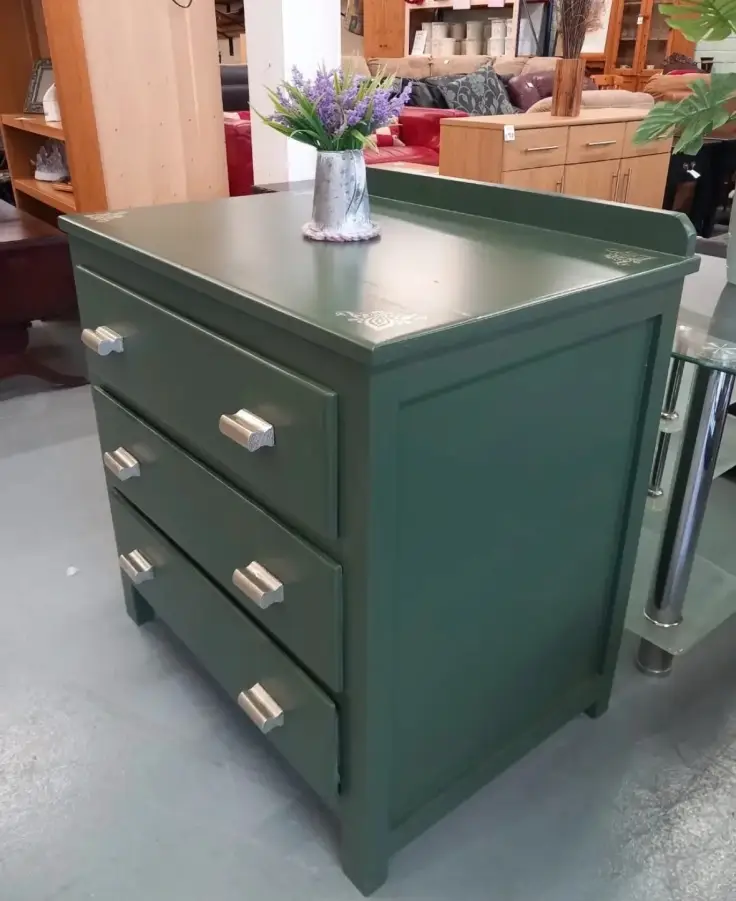
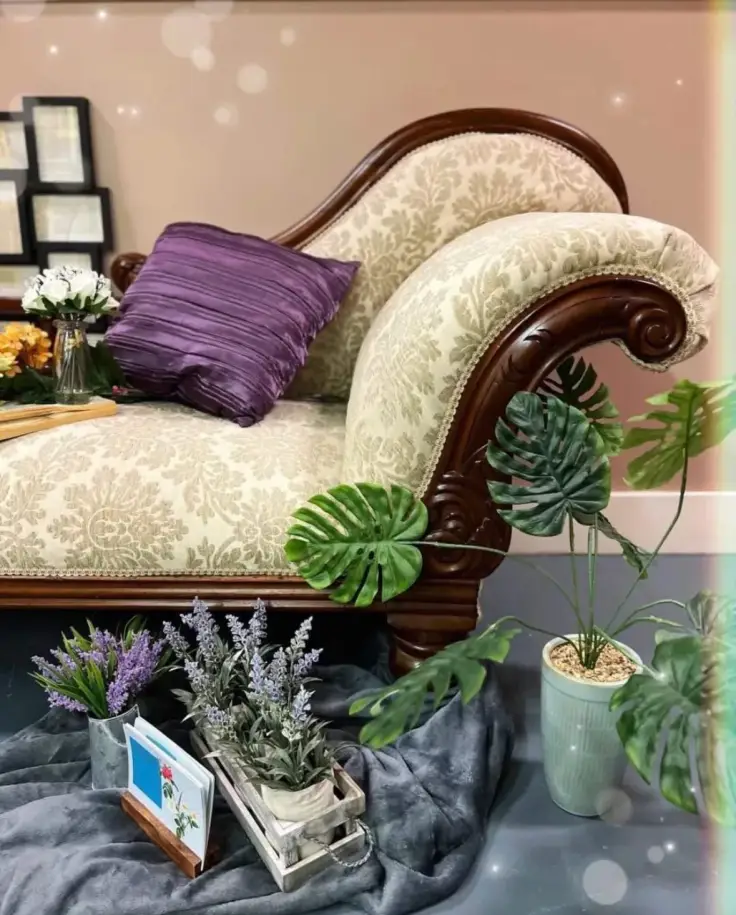
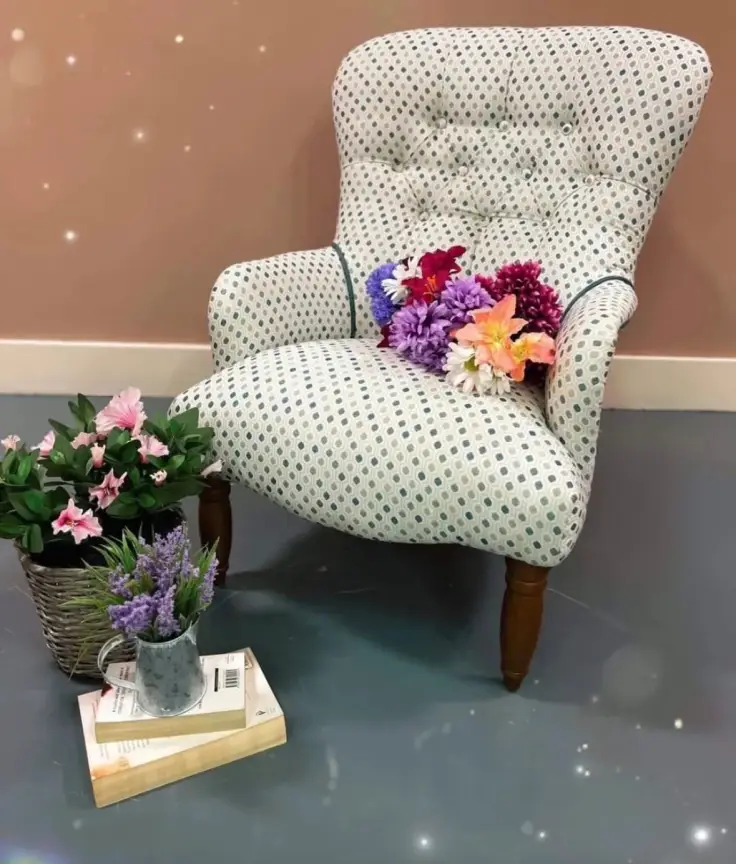
“We would have those with low disposal income; people who value the cost of the item,” says Murphy. “If something suits their budget, that’s one side of the spectrum. The other, then, is the eco-conscious person who understands the sustainable, circular economy and is doing it for that reason. And then you have the person who sees the work Revamp is doing, supporting people through education, training and unemployment, and how the money is being reinvested back locally.”
For Murphy, the wide variety of people willing to buy secondhand shows that the stigma once attached to owning used products is lifting. “It’s endless now what we’re doing, and people have caught on to it,” she says. “Let’s be honest, there was a stigma towards this… It’s just easier and more convenient to go out and buy another one. But now people definitely are thinking about it more and more. Financially, this is what people are thinking. ‘I can go and get that repaired for half the price than buying new.’”
Although servicing the local community is at the heart of the business, there is also a more affluent market for some of the more high-end products (“the high-spec stuff, a lot of vintage-type furniture,” as Murphy describes it) that Revamp restores.
This is a market that stretches across Ireland. Murphy specifically mentions a circular chair that had recently been advertised on their Facebook page for around €200 – hardly top-end money for a piece of furniture, but among Revamp’s pricier offerings.
“It sat below in the store for a long time because a lot of work went into it,” explains Murphy. “We can’t sell them for nothing. For that type of product, the local market isn’t the market for it, it’s probably for a more affluent market. What we’re trying to do is build ourselves up for a more affluent market as well. We’re trying to commit to what our ethos and our mission is, support the local market,” says Breda.
But then when Revamp gets in a piece that’s worth a little more than the usual, “plus added value to it with the workmanship that’s been completed”, the team have to get good value for their work.
She continues, “If it’s donated and there's nothing done with it, only maybe cleaned down, washed down, whatever, that’s fine. But when it goes to a workshop, and there's expertise and there's craftsmanship involved, there's more additional expense, whether it's paint, upholstery, foam, whatever. There's a price-to-value there. So that has to be acknowledged.”
And with that, business is thriving. In fact, demand far outstrips Revamp’s capacity – a testament to the quality of its product, and the soundness of its worldview.
“We’d find that if it’s a good piece, it could go up on our Facebook page and within 20 minutes it’s gone,” Murphy beams. “And right now we would probably have about a 12-week waiting list if you wanted something reupholstered or repaired. And come September, we more than likely will be closing down the list until after Christmas.”
This case study was conducted in partnership with Sustainable Media Ireland.