
Not your average shed: A hub of community connection
Ever wondered what goes on in a shed? With the growth in men’s sheds, women’s sheds and now queer sheds, there’s often more to it than you think.

Ever wondered what goes on in a shed? With the growth in men’s sheds, women’s sheds and now queer sheds, there’s often more to it than you think.
Picture a men’s shed. You might be imagining tools and tins of paint, loose nails and storage racks. But these spaces are more than just a place for making or fixing. Born from the need to be more in touch with our communities, skills sharing and making connections, these organisations are flourishing all over Ireland.
Men’s, women’s and queer sheds mean there is a place for everyone to go circular … and thrive.
Formed in 1980’s Australia, these sheds were originally for men to come together to work on all sorts of projects, fixing tables while telling stories. Mending and making was the order of the day.
Pretty soon the idea spread overseas, providing a social space for men, and then women and LGBQT+, to maintain a sense of purpose and avoid isolation, especially for retirees. Ireland has become one of the leading nations for the sheds, with 450 locations throughout the country. In fact, Ireland has the most sheds per capita worldwide.
Sheds are independent spaces and the range of activities differ from one to the next. Most are hubs of circularity, featuring repair and reuse as part of activities such as woodwork, gardening, carpentry and community work. More special interest sheds have also emerged, with a focus on anything from music and fishing to restoration work.
Restoring and mending
For example, one member from Collinstown Men’s Shed, Paul McQuaid created the Good Bike Project, with the goal of restoring damaged and unused bikes and donating them to people in need. The initiative has restored more than 750 bikes for Ukrainian refugees living in Ireland since its launch.
Bike donations come from far and wide and one such donation to Collinstown Men’s Shed consisted of 150 bikes from Ballymun Garda station!
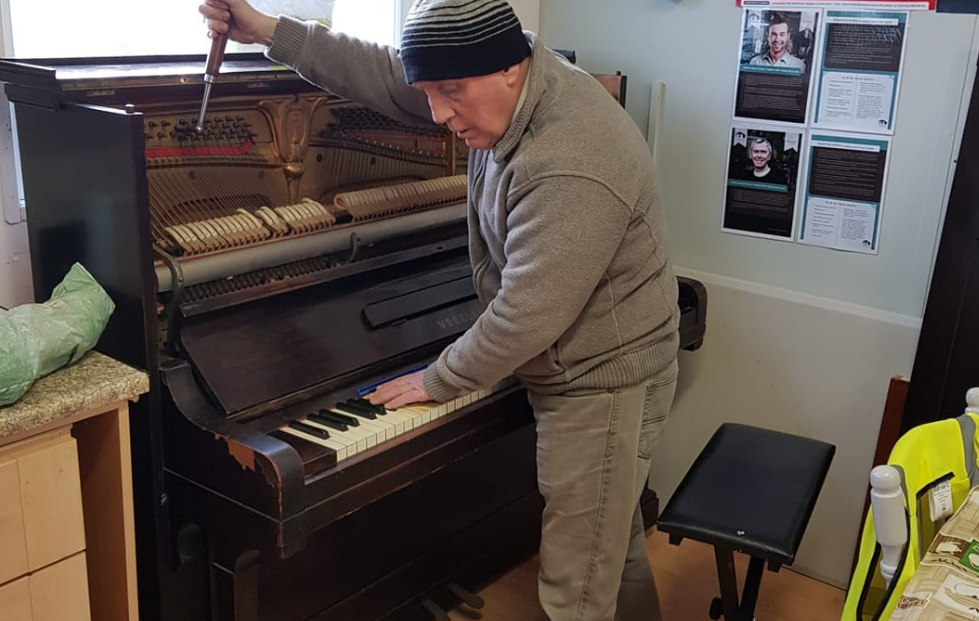
Many sheds engage in restoration work, bringing old objects back to life. Parteen Men's Shed in Co.Clare, for example, recently restored an old piano with the help of passionate member Noel Kelly, a trained piano tuner. Although his sight had deteriorated, he restored the piano over several months by touch and ear alone. The same shed also takes part in environmental community work, recently building a bug hotel and 20 bird boxes.
Womens sheds
Two County Laois women’s sheds have just secured funding through Climate Action grants for their sustainable activities. Mná le Cheile Women’s Shed will put their €1,467 funding towards the provision of tools for furniture upcycling and a tool library. Mountmellick Women’s Shed was awarded €2,473 and will use this to fund an upcycling project, including purchase of sewing machine.
A desire for connection
Laura from North Wicklow Women’s Shed said their group was born from a noticed need for connection after Covid. “We recognised the need and fulfilled it,” Laura tells us, listing out endless activities that are put on every month in their local centre.
From breast checks and nutritionists to delivering talks on deer, everyone is welcome and included. Trips are organised around the country, with weekday and weekend groups joining forces and getting to know each other.
“We’re losing the ability to sit down and have a chat with people,” says Laura.
Now she says there isn’t a trip to Tesco or walk down the streets of Bray that doesn’t involve bumping into someone from the group. It’s been a tremendous success with more than 100 members and an ever-growing waiting list.
Queer sheds - a place to belong
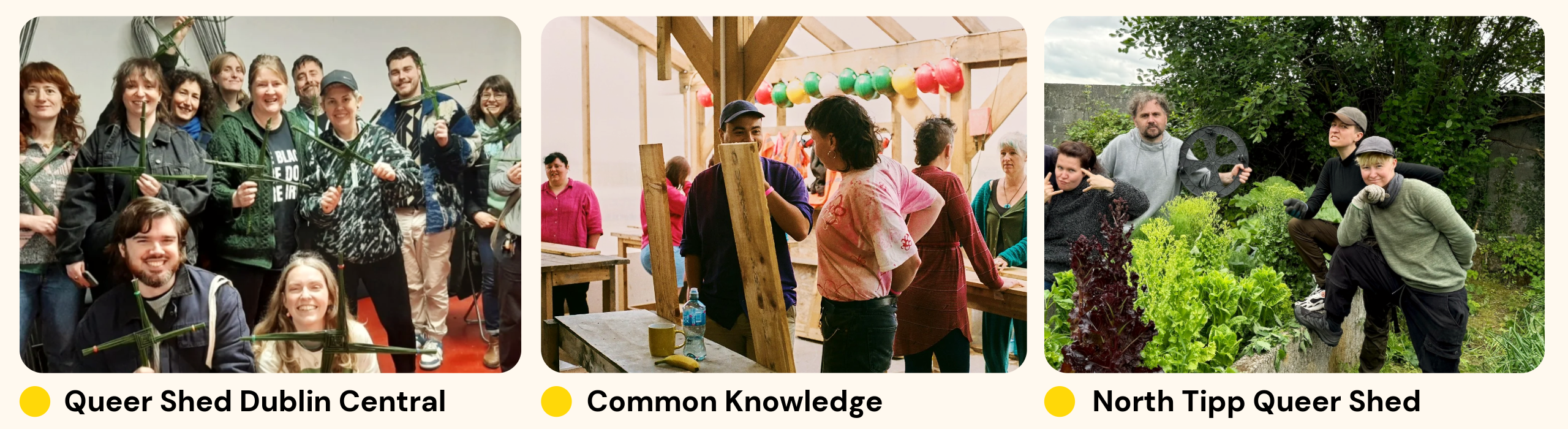
With the success of men's and women’s sheds growing, social enterprise centre Common Knowledge decided to trial the first queer shed in the world, in Co. Clare. After a very successful start, they invited other groups to join their network, with the North Tipperary Queer Sheds (NTQS) being one of the first to join the LGBTQ+ focused network.
We spoke to Clara of NTQS about what it means to run a shed like this.
“To us, a queer shed means community. Our monthly events are usually about sustainability or the natural world: hikes, gardening, carpentry. But the most important thing is getting people together regularly to build friendships. That kind of community among LGBT people is a little harder to come by outside of the big cities, but it’s important that everyone can find it.”
Events and workshops at their shed span everything from no-dig gardening led by Bruce to a carpentry workshop run by founder Lily. They run an event once a month, says Clara, with the theme changing every time.
“As our founder Lily Torode said, the world is a tough and lonely place. There’s a need for community and for support from like-minded people.
Queer sheds are reimagining the sheds model, where creativity and upskilling can be explored in a safe, inclusive space.
Building circular community skills
Speaking to Karin of Queer Shed Dublin Central, she says there was a clear gap for a more practical skills focused community, focusing on DIY, bike maintenance, food growing, clothes mending or more general repairs. While their work has expanded to other areas, the shed is underpinned by an interest in regeneration and repair.
“We are seeing more and more people attend regularly as our community builds. All of us are feeling more confident in coming forward and suggesting ideas for further skill-shares and events, or getting involved in the organising side of things. It’s wonderful to see!” says Karin.
New sheds to the movement are welcomed and encouraged in every community. Have you ever thought of joining a group like this? There is most likely a buzzing shed in your town, ready to welcome you with open arms.
Finding your local shed is easy
Join the communities of Queer, Women’s and Men’s sheds across the country:
Women's Sheds
- Women's Sheds of Ireland
- North Wicklow Womens Shed
- Womens Shed Claremorris
- Portlaoise Womens Shed
- Drimnagh Womens Shed
- Womens Shed Ennistymon
Queer Sheds
- Queer Sheds Common Knowledge
- Queer Sheds Dublin Central
- North Wicklow QS
- Queer Shed Mayo
- Galway City QS
- Queer Sheds Ciarraí
- North Tipp QS
Men's Sheds
- Irish Men's Sheds Association Find the full directory of Men's Sheds across Ireland here